
Opening Notes
This is Part 3 of the Shifting Grounds Series. We’ve acknowledged the ache and catalogued the cracks. Now we’re asking: what are the stories we hold that create symptoms of a world that no longer makes sense. Even if you’re starting here, this post stands alone as an exploration of the paradigm we’re swimming in.
The Water Around Us
In the last post, we explored the visible breakdowns happening all around us: ecological collapse, technological advances outpacing wisdom, and our social fabric unraveling. These aren’t separate crises but symptoms of something deeper breaking down.
They point to a story that no longer serves us.
This isn’t a fiction, but the invisible framework that shapes how we see reality. It’s the assumptions we inherit about what’s valuable, possible, and even normal. We’re like fish swimming in water, so immersed in our cultural narratives that we can’t see their influence.
But now, the water is getting murky. Each breakdown, crisis, and contradiction is like sediment stirring up from the bottom. It makes visible what was always there but never noticed. They show us the invisible edges of the story we’ve been living in without questioning.
What is a Story?
Cultural stories are the unspoken agreements that give us our assumptions, values, and proper actions. They tell us what’s possible, what matters, and even what we consider real.
These aren’t just intellectual ideas, they’re containers of meaning that hold our sense of purpose, connection, and deeper (spiritual) beliefs. They provide an unseen foundation for our lives to be built upon. But just as they build us up, when a story breaks down, so does everything built upon it.
We can look to past civilizations to see this. In ancient Rome, the myth of eternal order gave way to decadence and disillusionment before the empire slowly crumbled. The medieval era was ruled under the belief in the divine rights of kings, but when questioned, led to revolutions and the dismantling of old regimes. Story collapse is often an early warning sign that an unravelling is underway.
Yet, shared ideas are necessary to function in a complex world. They give us consensus rules we operate on, often without thinking. Trouble comes when we inherit stories without examining them. We don’t realize we see the world through a filter of what we’ve been taught, not how it really is.
We’re the fish in water. Our collectively conditioned minds create a medium so intrinsic to our experience that we often can’t perceive it. In this, we mistake our story for reality itself.
Even if you can see beyond it, we’re collectively driven by dominant myths. Our institutions, politics, and economy all operate according to shared narratives and assumptions, whether we individually agree or believe them or not.
The Dominant Story
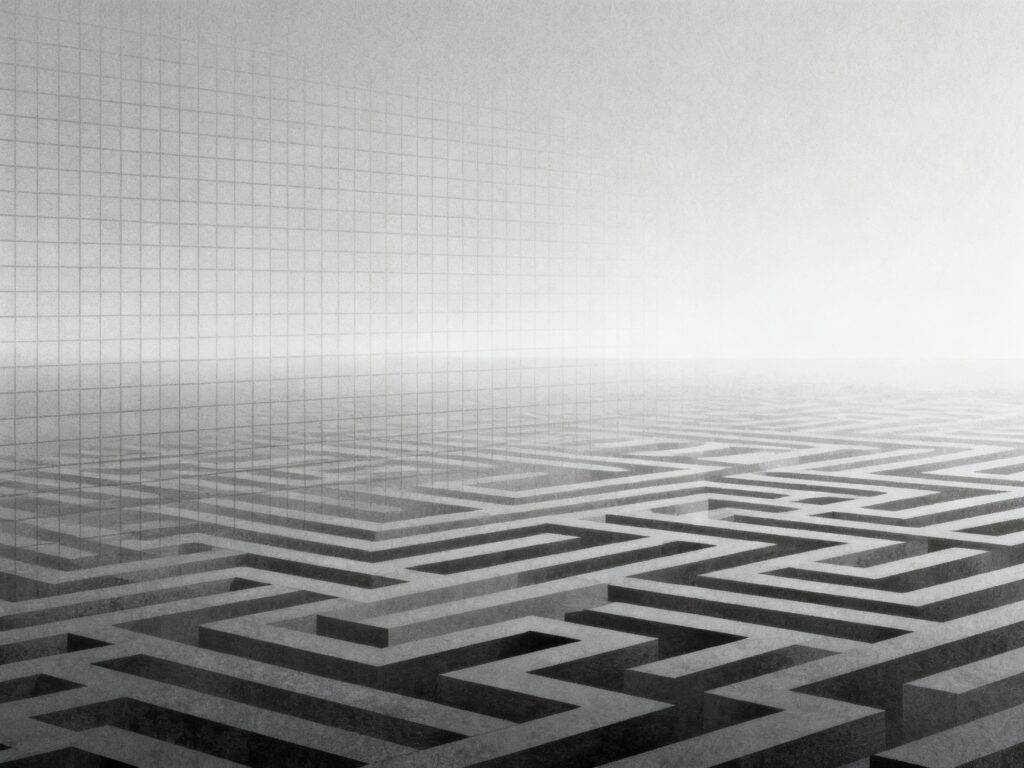
So, what stories make up our waters? Let’s look at some of the dominant ideas and myths shaping the modern world:
Progress requires constant growth. The economy must expand infinitely. More is always better. We define success by the accumulation of more: wealth, possessions, experiences, followers… The idea of “enough” doesn’t exist.
Technology as salvation. There isn’t a problem an advancement can’t solve. We can put off problems because a future solution will always appear.
Scientific materialism as ultimate truth. It’s only valid if it can be measured, quantified, or proven under trial. Intuition, ancient wisdom, and spiritual tradition are secondary. Consciousness, meaning, beauty, and love are either illusory, or reducible to brain chemistry.
Humans are separate from and superior to nature. The natural world exists to serve humanity. We can extract, manipulate and control it without consequence. Environmental protection is optional when it conflicts with metrics of growth.
Scarcity and competition are natural. Resources are fundamentally limited, so we must compete for survival. Others’ success threatens our own. We must hoard to be secure and wars are justified on this basis.
Power systems serve public interest. Those in positions of power—government officials, corporate leaders, institutions—have the public’s best interests at heart. Authorities make decisions based on expertise and moral duty to serve the common good.
This is the best way. Current systems may be imperfect but they’re normal and natural. There is no better alternative. Things may be dysfunctional but they’re the best we can do. Major change is impossible or dangerous. We must be realisitc and accept the status quo.
Now, this isn’t all wrong. Our story holds seeds of goodness. Scientific breakthroughs have allowed us to live better and understand our world more deeply. More people live with democratic ideals and universal human rights. Individual empowerment has liberated many from oppressive traditions.
But like a garden left untended, these seeds have been choked by weeds of greed, domination, and separation.
What Gets Left Out
When we mistake the story we swim in for everything that is, we miss what can’t be easily seen:
The sacred dimension of existence. Not everything can be measured or commodified. Love, wisdom, beauty, meaning, and the mystery of life exist for their own sake.
The non-rational ways of knowing. Our story dismisses intuition, embodied wisdom, and direct experience as inferior to logical analysis. But some of the most important knowledge like how to live well, what truly matters, and how to navigate relationships cannot be reduced to metrics and logic.
Our fundamental interconnectedness. We pretend we’re isolated individuals, but we’re fundamentally connected to all life. A problem somewhere will affect us, even if we don’t notice.
The wisdom of past cultures. Indigenous peoples maintained ecological balance for tens of thousands of years through sophisticated knowledge systems we dismiss as ‘primitive.’ In just two centuries of ‘progress,‘ we’ve triggered mass extinction an environmrntal collapse. Yet we still believe we’re superior.
The costs of our lifestyle. Our comfortable lives are unsustainable and depend on exploitation we never witness. The cheap clothes, electronics, and food that fill our lives are made possible by sweatshop labor, resource extraction, and environmental devastation exported to places we’ll never visit.
Future generations. Our policies and decisions rarely extend beyond a few years (decades if we’re generous) despite consequences that will be shouldered by our children, grandchildren, and beyond.
The cyclical nature of life. We demand endless progress in a world that revolves around cycles. We ignore the rhythms of growth and decay, work and rest, expansion and contraction that govern all natural systems.
This blindness has created a civilization that’s paradoxically powerful and suicidal. We split atoms but can’t prevent wars; develop new drugs, yet mental and physical health decline; look to distant stars but ignore the sacred within.
Why the Story Persists
If there are deep flaws, why does the story persist? We can begin by asking: who benefits?
Our story sustains power structures like corporations, elites, and centralized governments. It justifies inequality by cloaking it as “meritocracy”. It turns ecological destruction into “economic growth”. It transforms social isolation into “individual freedom”.
Mass media, advertising, and education systems reinforce these narratives. We’re taught to see alternative ideas as naive, unrealistic, or dangerous. They limit our ability to think beyond it, trapping us in its framework of logic.
The inconvenient truth is that many of us benefit from the story too. Our comfortable lives and predictable futures depend on systems of extraction and exploitation. Any change threatens the lives we’ve established. it’s often easier to believe these constructs than face our complicity.
The Personal Costs
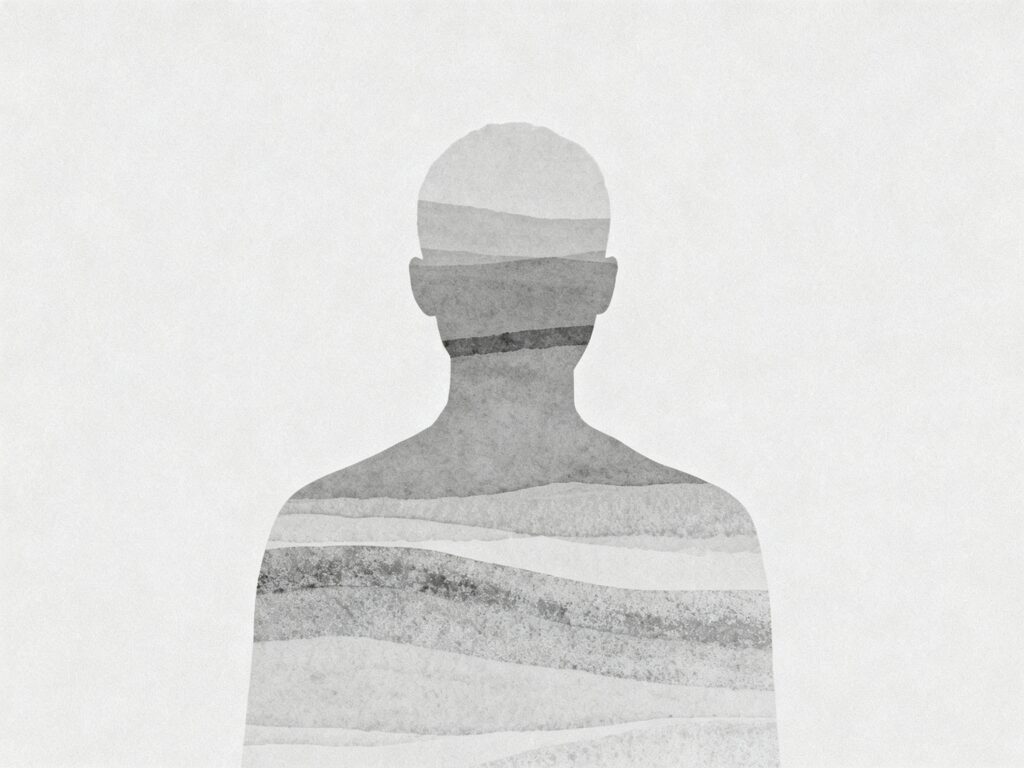
Even if we seem to benefit, the story is making us sick both physically and spiritually.
We’re more depressed, anxious, and isolated than any previous generation. We work jobs that feel meaningless to buy things we don’t need to impress people we don’t like. (— Fight Club)
We’ve gained material comfort but lost connection to purpose, community, and nature. We call this freedom while chained to debt, mortgages, and jobs we don’t want. We call it progress while destroying Earth’s conditions for life. We call it realistic while normalizing collapse.
Being well-adjusted now means participating in collective insanity.
Seeing the Water
I only began to see our story clearly when I stepped outside of it. Not just physically, but psychologically. While we don’t all need a grand adventure, we do need ways to see beyond our collective conditioning.
Travel showed me billions live differently, not just materially but conceptually, with different values and beliefs. There are many valid lenses to see the world through.
Tools like meditation and psychedelics temporarily dissolved my old ideas, revealing how conditioned my view was, and assumptions I never questioned. They exposed how the story programs our unconscious thoughts, desires, and fears.
These experiences led me to uncomfortable questions:
Why are we so removed from the life-giving natural world? Why does success often come with burnout? Why do we call this freedom when so many feel trapped? Why are we selling out future generations for expedient rewards? Why do our narratives often diverge from reality?
The more I questioned the more I saw that so much of what I’d been taught no longer serves me. I no longer see success in measurable titles, material wealth, or status. Now, I see it as connection, authenticity, and embodied presence—things that can’t be measured.
Our systems aren’t built to last or sustain life. Comfort, convenience, and predictability keep us from a fuller life. They’ve become barriers that prevent us from fully living.
The Story is Breaking Down
As we’ve examined, we’re not just facing individual crises, but the collapse of an old paradigm as the underlying assumptions that shape our civilisation are called into question. We’re entering what author Charles Eisenstein calls a “time between stories”.
According to Eisenstein, we have the opportunity to move from a “story of separation” where humans are separate from nature and each other, to the “story of interbeing” that recognizes the essential interconnectedness with all life.
But we’re not there yet. We’re in the liminal space of the in between, and it’s disorienting. The transitional phase is characterized by chaos, uncertainty, breakdown, and the crisis of meaning. We’re living through the death of one worldview and the birth pangs of another. Like any birth, it’s a messy process and delivery isn’t guaranteed.
The ache we feel is the natural response to living between worlds. The more aware we are, the more we feel. this isn’t pathological, but is part of a grieving process. Mourning can’t be rushed or skipped if something new is to emerge.
Rewriting Our Story
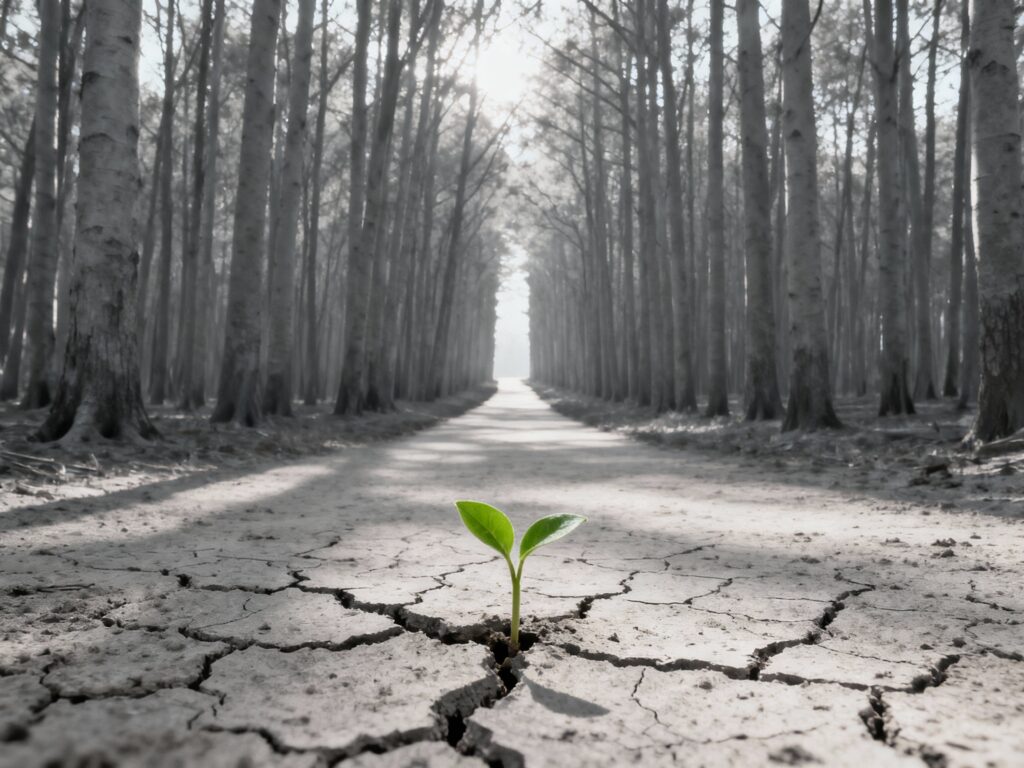
I believe our time is asking us to rewrite what our story is.
We don’t need to burn everything down, as anger might urge, but change is needed. It’s tempting to want to tear it all down and start from scratch, but this risks losing what good remains.
Perhaps letting it compost is wiser.
Fire destroys which compost transforms. Burning is quick, clean, and satisfying. Composting is slow, messy, and requires nurturing—but it also feeds the new.
We don’t need to reject all institutions, economic systems, and leadership. But it does mean demanding change where they don’t serve us. This isn’t passivity but discernment about what must wither.
We’re at a threshold. The old way of being is reaching its limit, and something new wants to emerge. Getting there isn’t quick or easy, but asks us to sit in the liminal space of the unknown. the cocoon doesn’t doubt that the butterfly will emerge, even when it’s yet to be revealed.
Similarly, we can still acknowledge the gifts of our contemporary ideologies and still long for something better. It’s not about guilt about what’s passed, but the responsibility to allow something new to emerge through us. The transformation is already underway. The question is how we’ll participate.
The Water is Getting Murky
So here we are, with the water we’re swimming in becoming murkier. Systems are breaking down, trust is eroding, and meaning is collapsing. A story that promised endless growth and comfort is crumbles as hidden costs surface.
We’re left with questions. Not just about what kind of world we want to build, but whether the one we’ve inherited can even hold together. Now, we’re in the mucky middle, waiting for what comes next.
But naming the story is the first step to writing a new one. It’s a story already being written by those around the world who refuse to accept this is the best we can do. It includes all of life, honours the sacred, and thinks in generations rather than in quarters.
The old story is dwindling. The new story is beginning. The question is: what role will you play in writing it?
Journal prompt: What aspects of our dominant story serve you? What aspects hold you back from living more fully?